
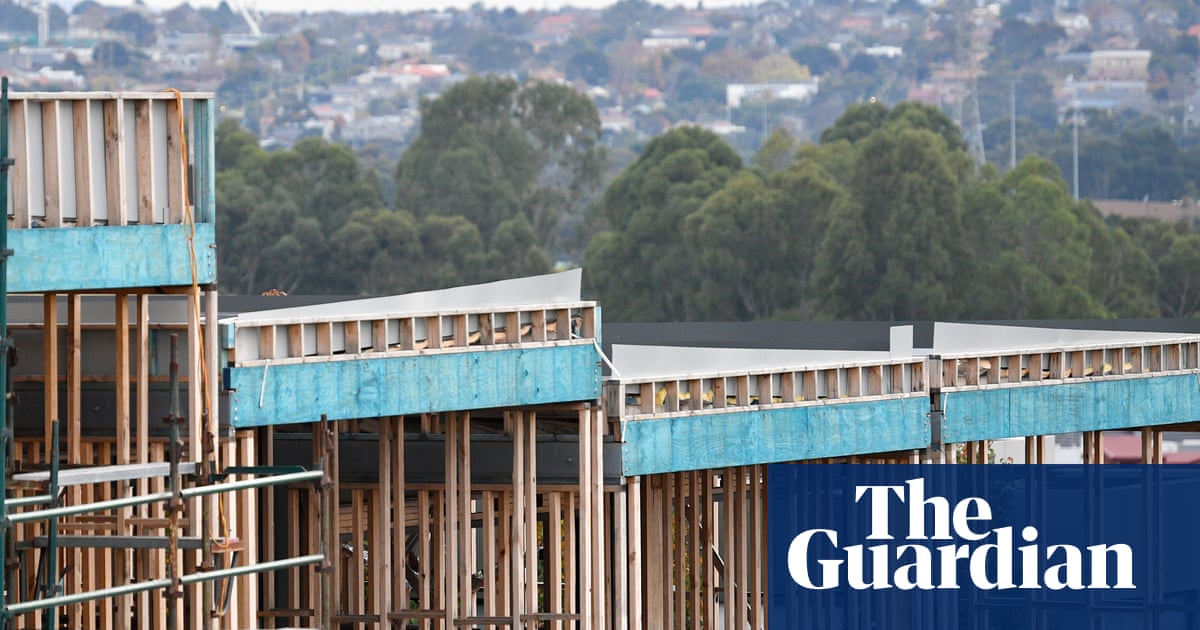
Donna Jones’s new “lovely little one-bedroom unit” was supposed to be part of her retirement plan.
The 63-year-old disability support worker’s new apartment, which she bought off-the-plan from the Bathla Group, looked great.
It would be smaller and easier to manage, much closer to her grandchildren than her old place, and, she believed, ready in just a couple of months.
After almost a year of delays, Jones was shocked to learn in the media that Bathla, one of New South Wales’s largest property developers, was not only broke, but sydney-property-developer-bathla-warns-it-could-fold-by-the-end-of-the-week” data-link-name=”in body link”>on the verge of being liquidated.
“I’m terrified that I’m going to lose my deposit,” Jones says. “I’ve worked all my life. I was a single mother. This was my retirement.”
Jones isn’t alone; thousands of homebuyers were left in the lurch by the sudden announcement on 25 August that Bathla had gone into voluntary administration, weighed down by almost $3.6bn in debt.
Bathla’s customers aren’t alone, either. While the developer’s size has turned its collapse into a major news story, thousands of other building companies have gone bust in the past year – some of which had sold people apartments with defects.
The Bathla crisis has shone a spotlight on broader problems in the…